
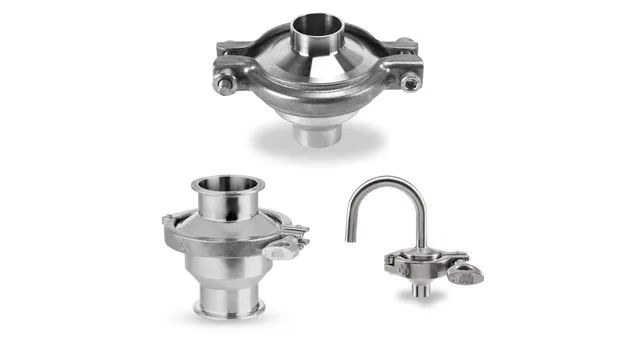
Control/check valves
Description
Alfa Laval check valve manages the flow of process liquids and gases through hygienic process systems. Easy to install, operate and maintain, these control valves safeguard process integrity and product quality while preventing potential damage to pipelines and equipment or system shutdown due to reverse fluid flow, pressure surges, water hammer and air entrainment. Fully automated and fast-acting, these hygienic valves provide safe, reliable and cost-effective fluid and gas management.
Hygienic check valve
Improve hygienic process efficiency with accurate flow control of process fluids and gases
Protect process systems against potential damage by eliminating vacuum conditions to equalize pressure in the system
Ensure plant safety and protect upstream equipment by preventing reverse flow and water hammer
Safely pressurize or release air from process pipelines and systems, preventing equipment damage whilst safeguarding product integrity and yield
Maintain stable CO2 pressure in process tanks or vessels by supplying gas and/or venting excess gas
Ensure product quality through hygienic, self-cleaning designs that promote valve cleanability and minimize the risk of contamination and cavitation
Protect your hygienic process systems with Alfa Laval control valve by managing the flow of process fluids and gases – safely, reliably and cost-effectively. Whether preventing contamination from backflow or providing pressure relief, Alfa Laval valves boost productivity and uptime whilst ensuring safe, reliable operation and low cost of ownership. These valves provide reliable and efficient regulation of fluid and gas flows.
How does a check valve work?
Alfa Laval check valves consist of many different valve types to fit specific applications and customer needs. The hygienic check valve is open when the pressure and flow of the process liquid or gas exceeds the pressure exerted on the valve plugs, free-moving polypropylene balls alternating between two seats, or stainless steel spring to fix it in position. To close the stainless steel check valve, higher pressure exerted on one side forces the valve mechanism to close, shutting off the flow of process liquid, air or gas.